Public Science Communication
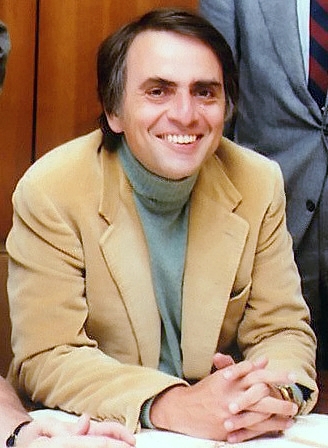
Translate complex scientific ideas into language that captivates general audiences. Carl Sagan's Cosmos series demonstrated that rigorous science becomes more powerful, not less, when made accessible to millions.
Steps
Choose a scientific concept you understand well and write a one-paragraph explanation for a curious teenager
Replace every piece of jargon with a vivid analogy or everyday comparison
Read your explanation aloud — if it doesn't create a sense of wonder, revise
Practice explaining it to a non-expert friend and note where their eyes glaze over
Refine until the explanation is both accurate and genuinely exciting
Practitioners
Related Systemsin Learning & Growth
Mirror Writing Notebook
Keep detailed cross-disciplinary notebooks that connect disparate fields. Leonardo da Vinci's method for fostering creative breakthroughs by linking art, science, and engineering.
Thought Experiments
Explore ideas by running vivid mental simulations. Einstein imagined riding a beam of light — and discovered relativity. Your imagination is a laboratory.
Reading 80 Books Yearly
Read voraciously and widely. Stephen King reads 70-80 books a year because he believes reading is the creative center of a writer's life.
Patient Observation
Immerse yourself in your subject for extended periods without rushing to conclusions. Jane Goodall spent years simply watching before she understood chimpanzee society.