Imagination and Rigor
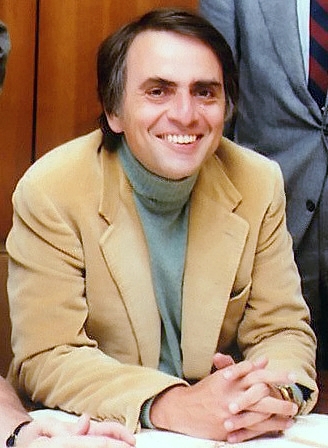
Balance creative speculation with disciplined verification. Carl Sagan argued that science requires both the free play of imagination to generate hypotheses and the ruthless rigor of testing to keep them honest.
Steps
Spend 15 minutes brainstorming wildly — no idea is too outlandish to write down
Select the three most interesting ideas and ask: what would have to be true for this to work?
Design a simple test or thought experiment for each one
Run the test mentally or practically — eliminate ideas that fail, refine those that survive
Document both the surviving ideas and the ones you killed, noting why each failed
Practitioners
Related Systemsin Learning & Growth
Mirror Writing Notebook
Keep detailed cross-disciplinary notebooks that connect disparate fields. Leonardo da Vinci's method for fostering creative breakthroughs by linking art, science, and engineering.
Thought Experiments
Explore ideas by running vivid mental simulations. Einstein imagined riding a beam of light — and discovered relativity. Your imagination is a laboratory.
Reading 80 Books Yearly
Read voraciously and widely. Stephen King reads 70-80 books a year because he believes reading is the creative center of a writer's life.
Patient Observation
Immerse yourself in your subject for extended periods without rushing to conclusions. Jane Goodall spent years simply watching before she understood chimpanzee society.